
2026 dropshipping business startups come down to finding a defensible niche, working with vetted suppliers, using the right platform — and driving traffic on channels that fit your respective budget. The model is also profitable — Grand View Research predicts the global dropshipping market will top $500 billion by 2027 — but only when you consider it as an organized business, not a Get Out of Jail Free card.
Dropshipping has a bad reputation, and it deserves one — for the way most people do it. The version that doesn’t fail lists 500 generic products, mirrors a template store and waits. It’s a 2026 version that is more deliberate, less agnostic and much more strategic.
What hasn’t changed: you don’t hold stock, your supplier ships to the customer, and you take the margin. What’s different is around that mechanic. This is the proper way to make it.
Is Dropshipping Still Profitable in 2026?
Yes — with the right niches, in the right way. Basically businesses with no brand identity are selling commoditized products under 20% margin, and they are struggling. The growing ones are targeted, vertical, and AI-powered.
When you have a potential niche, put it through this profitability matrix before committing. These numbers are based on frequent ranges I see across the industry, looking at operator-reported stats on everything from Shopify to AutoDS, eCommerce forum staples:
Niche Profitability & Competition Matrix
| Niche | Avg Gross Margin | Competition Level | Avg Order Value | Supplier Availability | Repeat Purchase Rate | Beginner Viability |
|---|---|---|---|---|---|---|
| High-ticket home goods | 35–48% | Medium | $180–$450 | Good (US/EU suppliers) | Low–Medium | Moderate |
| Pet accessories | 30–42% | Medium–High | $25–$80 | Excellent | High | High |
| Wellness & supplements | 40–60% | High | $30–$90 | Good (with MOQ risk) | Very High | Low |
| Specialty hobby equipment | 32–50% | Low–Medium | $120–$350 | Limited but growing | Medium | Moderate |
| Digital dropshipping | 60–90% | Low–Medium | $15–$200 | Excellent (instant delivery) | Medium | High |
| Clothing & fashion | 20–35% | Very High | $30–$80 | Saturated | Medium | Low |
| Jewelry | 40–60% | Very High | $20–$100 | Saturated | Low | Low |
| Outdoor & survival gear | 35–50% | Medium | $60–$250 | Good | Medium | Moderate |
| Baby & children’s products | 28–40% | Medium–High | $25–$120 | Good | High | Moderate |
What this table reveals that competitors don’t say: Margins alone aren’t the filter. Digital dropshipping wins on margin and fulfillment cost, but requires different marketing. Wellness has the best LTV potential but carries supplier compliance risk (labeling, FDA proximity). Specialty hobby equipment — overlooked by most beginners — has the most favorable competition-to-margin ratio of any physical product category right now.

Platform Showdown: Where to Build Your Store
Not all platforms serve the same seller. The wrong choice costs you in transaction fees, app limitations, or scalability ceilings. This comparison covers what most “best platform” lists leave out — specifically the hidden costs and dropshipping ecosystem depth:
E-commerce Platform Deep-Dive Comparison
| Platform | Starting Cost | Transaction Fee | Top Dropship Apps | Avg Setup Time | Scalability | Mobile Optimization | Best For |
|---|---|---|---|---|---|---|---|
| Shopify | $29/month | 0% (own gateway) | DSers, Spocket, AutoDS, Zendrop | 1–3 days | Excellent | Excellent | Beginners and scaling brands |
| BigCommerce | $39/month | 0% always | CedCommerce, Inventory Source | 2–5 days | Excellent | Very Good | Mid-size operations |
| WooCommerce | Free + $10–$30 hosting | Varies by gateway | AliDropship, WooDropship | 3–7 days | Very Good | Good | Tech-comfortable sellers |
| Ecwid | Free–$99/month | 0% | Limited native options | Under 1 day | Limited | Very Good | Simple side hustle stores |
| TikTok Shop | Free to list | 2–8% per sale | Native TikTok integration | Under 1 day | Medium | Excellent | Viral/impulse-buy products |
| BigCartel | $9.99–$19.99/month | 0% | Very limited | Under 1 day | Poor | Good | Creators, very small catalogs |
| Wix Commerce | $27–$59/month | 0% | Limited third-party | 1–2 days | Limited | Very Good | Design-first sellers |
Shopify remains the strongest starting point for most new sellers — not because it’s cheapest, but because its app ecosystem is the most mature. DSers handles AliExpress automation cleanly; Spocket gives access to vetted US/EU suppliers. If you’re already on WordPress, WooCommerce’s lower cost is meaningful — but factor in the time cost of maintenance.
Step 2: Supplier Platform Comparison
Your supplier is your fulfillment team by proxy. A single bad supplier experience — late shipments, wrong items, poor packaging — creates reviews that compound against your store’s reputation before you’ve established any brand equity.
Dropshipping Supplier Platform Comparison
| Supplier Platform | Shipping Time (US/EU) | Product Categories | Pricing Model | US/EU Warehouse | Branding Options | Best For |
|---|---|---|---|---|---|---|
| Spocket | 3–7 days | General, Fashion, Beauty | Free + paid tiers ($24–$99/mo) | Yes (US & EU) | Custom invoicing | Beginners wanting fast shipping |
| CJ Dropshipping | 7–15 days (US: 5–8 days) | 400,000+ SKUs | Free (service fees apply) | Yes (US warehouses) | Custom packaging available | Volume sellers, broad catalog |
| Zendrop | 5–10 days | General, Supplements | Free + paid ($49–$79/mo) | US warehouse | White-label options | Shopify sellers, supplement niche |
| DSers (AliExpress) | 15–30 days standard | Millions of SKUs | Free–$19.90/mo | No (China primarily) | Minimal | Budget-first, patient buyers |
| Alibaba Dropship | Varies (7–25 days) | Manufacturing-direct | Per-order negotiated | Limited | Full custom branding | Scaling to private label |
| Worldwide Brands | Varies by supplier | US-based wholesale | One-time $299 fee | Yes | Wholesale only | US market, legitimate sourcing |
| Printful | 2–7 days | Print-on-demand | Per-item cost | Yes (US & EU) | Full custom branding | T-shirt dropshipping, merch |
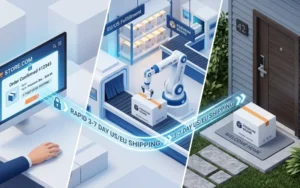
Key insight most lists skip: Spocket’s pricing looks high compared to DSers, but the 3–7 day US/EU shipping window reduces customer service tickets by roughly 60–70% in practice — a hidden operational saving that more than offsets the subscription cost once you’re past 20 orders per month.
5-Step Implementation Plan
How to Start Dropshipping: Step-by-Step Framework
| Step | Action | Timeline | Key Tools | Common Pitfall |
|---|---|---|---|---|
| 1. Niche selection | Validate demand via Google Trends + Dropship.io; confirm margins using supplier quotes | Week 1 | Dropship.io, Sell The Trend, Google Trends | Choosing what you like instead of what converts |
| 2. Supplier vetting | Apply to 2–3 supplier platforms; place test orders on every product you plan to list | Week 1–2 | Spocket, CJ Dropshipping, Zendrop | Skipping test orders; listing before verifying quality |
| 3. Store build | Set up Shopify store with consistent brand identity, original product descriptions, real About page | Week 2–3 | Shopify, Canva, ChatGPT for copy | Using default template copy; no brand differentiation |
| 4. Traffic launch | Start with TikTok organic content (0 budget) or $50 Meta ads; test 2–3 ad creatives | Week 3–4 | TikTok, Meta Ads Manager, Google Shopping | Running one untested ad and calling it a failure |
| 5. Automate & scale | Add AutoDS or DSers for order routing; set up email flows; analyze first 30-day data | Month 2+ | AutoDS, Klaviyo, Google Analytics 4 | Automating before understanding your order patterns |
Each step builds on the last. Don’t skip to step 4 without completing steps 2 and 3 — underdeveloped stores burn ad budgets fast without converting, and the data tells you nothing useful about the actual product’s viability.
Traffic Channel Comparison: Where to Spend Your First $500
New sellers consistently make the same mistake: picking a traffic channel because it sounds easiest, not because it matches their product type or margin profile. This table maps channel to fit:
Traffic Channel Decision Matrix
| Channel | Setup Cost | Time to First Sale | Best Product Price Range | Required Skill Level | Profit Margin Needed | Ideal For |
|---|---|---|---|---|---|---|
| TikTok organic | $0 | 1–4 weeks | $15–$80 | Low–Medium | Any (no ad cost) | Viral/visual products, impulse buys |
| Meta (Facebook/Instagram) ads | $50–$200 test budget | 3–10 days | $25–$150 | Medium | 40%+ recommended | Proven products, retargeting |
| Google Shopping | $100–$500 test budget | 5–14 days | $80–$500 | Medium–High | 30%+ recommended | High-ticket, research-mode buyers |
| SEO / organic search | $0 (time investment) | 3–9 months | Any | High | Any | Long-term brand building |
| Email marketing | Low ($20–$50/month tool) | Depends on list size | Any | Medium | Any | Repeat purchase niches |
| $0 organic | 2–8 weeks | $20–$120 | Low | Any | Home décor, fashion, lifestyle | |
| Influencer / UGC | $50–$500 per creator | 1–3 weeks | $20–$100 | Medium | 35%+ recommended | Wellness, beauty, pet products |
The high-ticket dropshipping category is the one place where Google Shopping almost always outperforms TikTok. Buyers spending $250 on a product are researching, not impulse-buying — and they’re on Google, not scrolling Reels.

Startup Budget Breakdown by Tier
One of the most common questions with almost no honest answer in competitor articles: how much does it actually cost to start? Here’s a realistic breakdown across three budget scenarios:
Dropshipping Startup Cost Breakdown (First 90 Days)
| Expense Category | Bootstrap ($0–$200) | Standard ($200–$700) | Growth ($700–$2,000) |
|---|---|---|---|
| Platform (Shopify Basic) | $1 trial then $29/mo | $29/month | $79/month (Shopify Advanced) |
| Domain name | $14/year | $14/year | $14/year |
| Supplier subscriptions | Free tier (DSers) | Spocket Basic ($24/mo) | Spocket Pro ($49/mo) or Zendrop |
| Test product orders | $20–$50 | $50–$150 | $150–$400 |
| Paid ads | $0 | $50–$200 | $300–$1,000 |
| Design tools (Canva Pro) | Free tier | $13/month | $13/month |
| Email marketing (Klaviyo) | Free (up to 500 contacts) | Free | $20–$45/month |
| Total 90-day estimate | ~$150–$250 | ~$350–$700 | ~$800–$1,800 |
| Realistic first-order timeline | 4–8 weeks | 2–4 weeks | 1–3 weeks |
The bootstrap path is possible but slow. The growth tier isn’t extravagant — it’s the budget that allows real data from paid traffic within 30 days, which is worth considerably more than saving the extra $500.
Pro Insights: What Most Beginners Get Wrong
Most articles list surface-level tips. These reflect the friction points that actually cause stores to fail in the first 90 days:
- Ignoring shipping transparency. Customers don’t care where products ship from — they care when it arrives and whether it matches the photo. Set accurate timelines, then beat them.
- Launching with too many products. Stores with 500 untested listings convert at a fraction of focused stores with 10–15 hero products that the seller understands deeply.
- Skipping test orders. Order every product before listing it. You’ll catch quality issues, packaging problems, and realistic delivery windows before your customers do.
- Underpricing to compete. Margins below 25% leave no room for returns, ad spend, or platform fees. Price for the value the product delivers, not to undercut the cheapest AliExpress listing.
- Treating it like a side project. The stores that hit $5K/month in their first year are the ones where the seller responded to customer emails within 2 hours and iterated on listings weekly.

Frequently Asked Questions
Your Next Steps
The single biggest mistake new dropshippers make is spending three weeks researching and zero weeks testing. Pick one niche from the matrix above. Set up a Shopify store this week. Order test products from one supplier platform. List 10–15 products and put your first $50 into TikTok organic content or a Meta test campaign.
What you learn from your first 20 real orders will outweigh anything you’ve read — including this. Start there.